
Catálogo
Catalogue
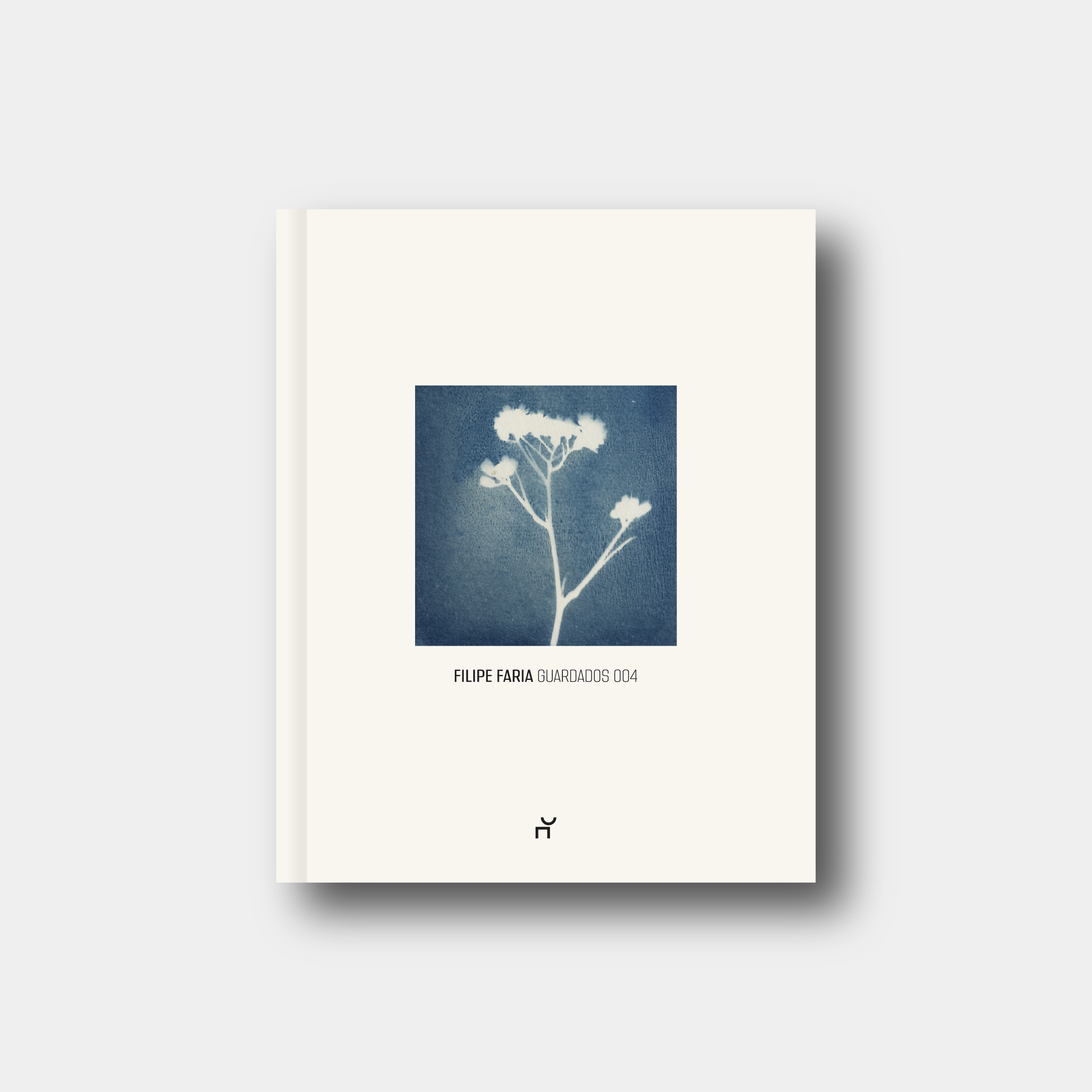
Guardados 004 • As flores
2026
MU0151
LIVRO BOOK
Filipe Faria
Fotografia Photography
Filme Film
Som Sound
Paulo Longo
Posfácio Afterword
Um projecto A project by
Arte das Musas
Em parceria com In partnership with
Município de Idanha-a-Nova
\UNESCO Creative City of Music
Apoio Support
República Portuguesa - Cultura
\Direção-Geral das Artes
Agradecimentos Acknowledgments
Paulo Longo
Posfácio Afterword Paulo Longo
Edição Edition Arte das Musas
Colecção Collection Guardados
Parceria Partnership O Homem ONG
Design gráfico Graphic design Filipe Faria
1ª Edição 1st edition Idanha-a-Nova 2026
© 2026 Filipe Faria, fotografias photos
© 2026 Arte das Musas
AS FLORES
THE FLOWERS
Excerto | Excerpt
“Este, como todos os objectos que não são inteiramente conscientes mas que, pela frequência do uso e pela proximidade com o corpo humano, vão adquirindo uma espécie de memória que não é bem memória e uma espécie de pensamento que não chega a ser pensamento, mas que em certas circunstâncias pode confundir-se com ele, este, dizia, foi construído por um homem que não sabia que estava a construir o vazio, mas apenas a entrelaçar vergas de castanho segundo a técnica que lhe ensinara o pai e que o pai aprendera com um homem de fora, vindo sabe-se lá de onde, talvez do lado de lá do rio ou de mais longe ainda, um desses homens que aparecem nas aldeias como se tivessem vindo do fundo da terra e desaparecem da mesma maneira, deixando atrás de si uma receita de pão, uma superstição e um gesto com as mãos que, quando repetido com a devida paciência, resulta num objecto capaz de conter outras coisas, como legumes, galinhas mortas, mantas dobradas ou mesmo, numa emergência que não chegou a ser relatada mas que aconteceu, um animal recém--nascido embrulhado em panos, não para ser salvo nem para ser escondido, mas porque havia pressa e mais ninguém tinha braços.” (…)
Filipe Faria
“This one, like all objects that are not entirely conscious, but through frequent use and closeness to the human body begin to acquire a kind of memory that is not quite memory, and a kind of thought that never quite becomes thought, yet which, in certain circumstances, can be mistaken for it, this one, as I was saying, was built by a man who did not know he was building emptiness, but was merely weaving chestnut wood ribbons according to the technique taught by his father and learnt by his father from a man from elsewhere, from who knows where, perhaps from across the river or from even farther, one of those men who appear in villages as if they had come from the depths of the earth and vanish in the same manner, leaving behind a recipe for bread, a superstition, and a gesture of the hands which, when repeated with due patience, results in an object capable of containing other things, like vegetables, dead hens, folded blankets or even, in an emergency that was never recorded but did happen, a newborn creature wrapped in cloth, not to be rescued or to be hidden, but simply because there was haste, and there were no more arms.” (…)
Filipe Faria
GUARDADOS
Um “guardado” é um objecto que sobreviveu ao tempo com intenção. É um daqueles objectos que decidimos poder vir a fazer parte de nós, do que somos hoje, na antecipação de um futuro em que precisamos de ser recordados da sua importância. Guardamos um “guardado” porque o queremos fixar no tempo, neste tempo… para que não se perca nunca.
Guardado (adjectivo): Protegido ou defendido contra algo ou alguém; Que se conserva para não se deteriorar; Posto de parte; Oculto, escondido.
Guardados (nome masculino plural): Objectos que se guardam em caixas ou outros compartimentos.
Um “guardado” pode ser uma fotografia de um acontecimento mais ou menos especial, mais ou menos banal, uma fotografia nossa ou de outrem. De um agente activo na nossa história ou de um desconhecido, ou de um grupo de desconhecidos, ou de um grupo de desconhecidos à volta de um conhecido. Pode ser aquela tesoura da poda que nunca falhou, aquele colar que nos definia, aquele apontamento de coisa importante ou daquela vez em que nos saíu um verso ou uma estrofe. Pode ser um recorte escurecido de uma revista ou jornal entretanto desaparecidos. Pode ser um equipamento tecnológico de ponta, entretanto obsoleto. Pode ser grande, não tem de ser pequeno (haja espaço para guardar o “guardado”). Pode ser uma escada de azeitona na qual os nossos pais e avós subiram e desceram milhares de vezes. Pode, até, ser um “guardado” de gerações… um que nunca experimentámos e que não experimentaremos porque não queremos correr o risco.
Com estes “guardados” podemos contar uma história… a dele, do seu dono ou dona. Ou outra história qualquer, aquela que nos vier à cabeça quando o vemos, tocamos, cheiramos… quando imaginamos, condicionados, como sempre somos, pelo que sabemos ou ignoramos. Estes são os “guardados” sobre os quais queremos contar histórias.
Filipe Faria
A 'guardado’ is an object that has survived over time as a result of intention. It is one of those objects that we decide can become part of us, of who we are today, in anticipation of a future in which we’ll need reminding of its importance. We keep it because we want to preserve it in time, in this time... so that it will never be lost.
Guardado (adjective): protected or defended against something or someone; that is collected and preserved so as not to become damaged; kept away; hidden, concealed.
Guardados (noun, plural): objects that are stored up in boxes or other containers.
A ‘guardado’ can be a photograph of an event, whether special or banal, a photograph of oneself or of someone else. Of an important figure in our lives or of a stranger, or of a group of strangers, or of a group of strangers with someone we know. It can be that pair of pruning shears that never once failed, that necklace that defined us, that note about something important or that time we came up with a verse or a stanza. It can be a browned clipping from a magazine or newspaper that has long since disappeared. It can be what was once a piece of cutting-edge technology, now obsolete. It can be big; it doesn't have to be small (there's plenty of space to keep the ‘guardado’). It can be an olive-picking ladder that our parents and grandparents climbed up and down thousands of times. It can even be a ‘guardado’ from generations past... one we've never used and won't use because we don't want to take the risk.
With these ‘guardados’ we can tell a story... their story or the story of their owners. Or any other story; the one that comes to mind when we see it, touch it, smell it… when we imagine it, conditioned, as always, by what we know or don't know. These are the ‘guardados’ we want to tell stories about.
[Guardado: treasured, preserved, guarded, protected, kept safe]
Filipe Faria
Posfácio | Afterword
No princípio era a cor. A atração do desenho. Vibrante, lá no alto. Inacessível.
Não se lhe podia tocar. Podia partir-se. Assim o decidiam os adultos perante a criança curiosa e inquieta.
Foram anos de interrogações e alguma frustração. A bela imagem continuou, anos a fio, nessa condição. A criança, essa, à espera. À espera da mudança que o tempo traria. A cada visita, uma olhada. Para ver se ainda estava tudo no mesmo sítio. Se nada tinha mudado. Se dali teria saído por algum motivo que os crescidos considerassem válido o suficiente. Mas não. Nada.
A bela imagem permanecia intacta e intocável. Ou quase. Só a limpeza, cuidadosa, a afastava um pouco dessa condição.
Mais do que estima, parecia haver uma espécie de veneração implícita. Aquele objecto detinha um valor que não se podia expressar em termos materiais. Seria algo impensável, ouvia-se dizer de tempos a tempos.
Passaram-se anos até que a criança pudesse compreender verdadeiramente o seu significado. Ainda não era um adulto — mas já não era uma criança — quando a história, aos poucos, se foi revelando.
O muito belo era também o muito antigo. Uma definição suspeita por detrás de toda a atenção que merecia entre os guardiões da memória familiar. Um entre vários, pois a bela imagem — agora definitivamente um prato — não estava sozinha. Vivia na cantareira entre os seus pares. Que, na verdade, não o eram bem. A antiguidade e a dimensão davam-lhe um estatuto algo à parte. É verdade que não havia outro igual. Ali, era único.
A criança que já não era uma criança procurou saber mais. Por muito belo que fosse, o prato não falava. A história teria de vir de outro lado. Do lado daqueles que, ao longo dos anos, o tinham guardado tão cuidadosamente.
Até onde a memória chegava, a história começava na avó da mãe, uma bisavó de nome peculiar, Delfina. A qual, dizia-se, o teria recebido da parte de alguém. Indeterminado.
Seguro, seria contar com pouco mais de um século. Algo em si só notável para algo tão frágil.
Todo o cuidado que merecera tinha produzido o efeito desejado. Três gerações atravessadas. O prato, o grande prato, manteve vivas as suas cores. O uso — se o houve — poucas marcas deixou no seu corpo. E uso houve. Precisamente onde reside a parte mais fascinante da sua história, que era, também, a da família que dele cuidou.
O grande prato não era um mero objecto, mas um símbolo. Da festa, consubstanciada em matéria doce, trocada entre parentes, amigos e vizinhos da comunidade. Recebeu e transportou arroz doce e papas de carolo, consumidas na partilha dos casamentos e das festividades cíclicas, como o Natal e a Páscoa. Foi pedido e emprestado a quem não tinha nem podia ter. Correu casas e ruas. Dignificou papéis e relações entre pessoas — o prato de padrinhos e madrinhas honrava com a sua beleza, testemunho de respeito e consideração, dizia-se lá por casa.
Perdeu-se a conta das funções a que assistiu, tantas foram. Quando a criança o conheceu ou dele teve consciência, já estava retirado. A idade terá sido uma das razões, mas outras houve. A vida tinha mudado e com ela as festas. O lugar que nelas lhe competia deixou de o ser, substituído pela novidade dos materiais, práticas e aspirações das pessoas.
O grande prato continuou a ser cuidado, talvez até com mais carinho. A memória, forte, não permitiu que fosse de outra maneira. O olhar de uma criança também não. Até hoje.
Paulo Longo
In the beginning, there was colour. The pull of the image. Vibrant, up there. Out of reach.It could not be touched. It might break. That was what the adults decided, faced with a curious, restless child.Years of questions followed, and some frustration. The beautiful image remained, year after year, unchanged. The child, meanwhile, waited. Waited for the change that time would bring. At each visit, a glance. To see whether everything was still in the same place. Whether nothing had changed. Whether it might have been taken away for some reason the grown-ups considered sufficiently valid. But no. Nothing.The beautiful image remained intact and untouchable. Or almost. Only careful cleaning disturbed it slightly.More than care, there seemed to be a kind of implicit reverence. That object held a value that could not be expressed in material terms. That would be unthinkable, one would hear from time to time.Years passed before the child could truly understand its meaning. No longer quite a child — but not yet an adult — when the story slowly began to reveal itself.What was most beautiful was also what was oldest. A suspicious definition behind all the attention it received among the guardians of family memory. One among several, for the beautiful image — now definitively a charger — was not alone. It lived on the dresser among its companions. Though, in truth, they were not quite. Its age and its size gave it a somewhat separate status. It is true that there was no other like it. There, it was unique.The child who was no longer a child tried to learn more. However beautiful it was, the plate did not speak. The story would have to come from elsewhere. From those who, over the years, had kept it so carefully.As far back as memory reached, the story began with the mother’s grandmother, a great-grandmother with an unusual name, Delfina. Who, it was said, had received it from someone. Undetermined.It was likely a little over a century old. In itself, something remarkable for something so fragile.All the care it had received had produced the desired effect. It passed through three generations.. The charger, the large charger, kept its colours alive. Its use — if there was any — left few marks on it. And use there was. Precisely where the most fascinating part of its story lies, which was also that of the family who cared for it.The large plate was not a mere object, but a symbol. Of celebration, made tangible in sweet form, exchanged among relatives, friends and neighbours in the community. It held and carried rice pudding and papas de carolo, shared at weddings and at cyclical festivities such as Christmas and Easter. It was requested and lent to those who did not have one and could not have one. It moved through houses and streets. It dignified roles and relationships between people — the godparents’ plate, honoured by its beauty, a sign of respect and consideration, as was said at home.The number of occasions it witnessed is lost, so many were they. By the time the child came to know it, or to become aware of it, it had already been withdrawn. Age may have been one reason, but there were others. Life had changed, and with it the celebrations. The place it once held within them was no longer its own, replaced by new materials, practices and aspirations.The large plate continued to be cared for, perhaps with even greater affection. Memory, strong, would not allow it to be otherwise. Nor did the gaze of a child. To this day.
Paulo Longo