

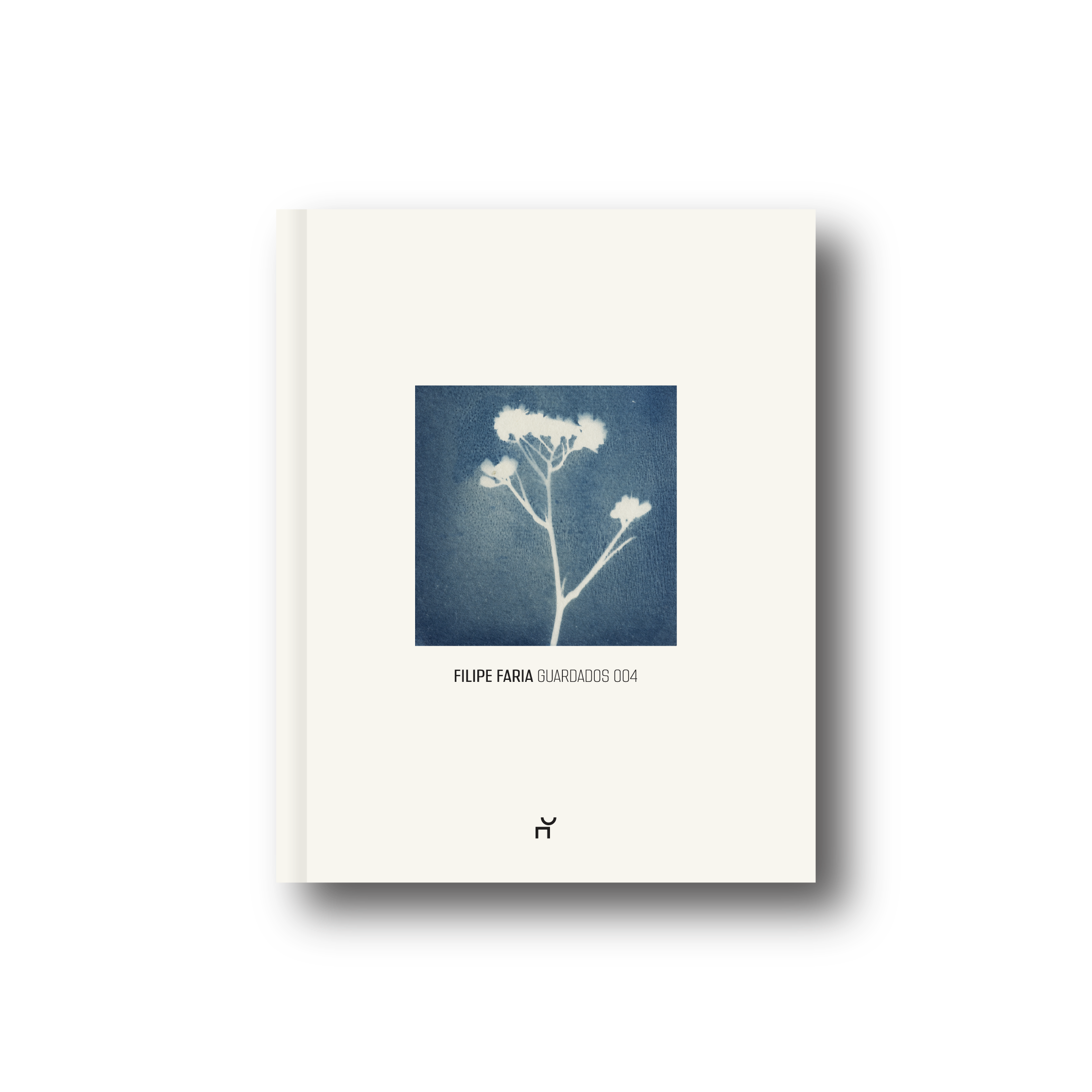
Guardados 004
Filipe Faria
ensaio — cianotipia — som | essay — cyanotype — sound
As flores
Um objecto subtraído ao tempo pelo que nele permanece depois de ter sido usado. Conserva sinais de repetição, pequenas variações acumuladas que não se anulam e que continuam a actuar, mesmo quando o gesto já não acontece.
Guardado, o objecto não se fixa fora do tempo. Transporta-o. O que passou e não regressa, e outro que insiste, inscrito na matéria, sem cessar completamente. Um tempo sobreposto.
O que se observa corresponde a um estado posterior. Um depois que se organiza como condição, não como sequência. Depois do uso, da presença, do gesto. Falha.
A superfície e o limite são instáveis. Retêm de forma aparente. Desigual. Parte fixa, parte cede. Aquilo que se inscreve não se completa. Permanece como intervalo. Falta.
A atenção aproxima-se. Perde definição. Afasta-se. Reorganiza. Nenhuma posição resolve. Aquilo que se reconhece mantém-se instável, numa relação de semelhança que não coincide.
A repetição instala-se como estrutura, mas não confirma. Cada ocorrência desloca a anterior, introduzindo uma diferença mínima que se acumula e impede a fixação de uma forma única.
A falha atravessa o conjunto como condição, não como acidente. Falha na coincidência. Falha na retenção. Falha na linha. E é essa falha que produz variação.
A superfície torna-se campo. Um lugar onde diferentes estados coexistem, sem se organizarem numa progressão. Aquilo que foi não desaparece. Permanece activo.
O tempo não passa.
As flores, já fixadas como motivo no objecto, regressam como vestígio dessa repetição. Ao entrarem em contacto com a superfície, deixam de funcionar como forma reconhecível. Interrompem a incidência. Introduzem zonas de reserva onde a luz não se estabelece por completo.
Aquilo que se torna visível depende dessa interrupção. Não corresponde ao que esteve, mas ao que não chegou a fixar-se. Um rasto que não reconstrói a forma, apenas a desloca.
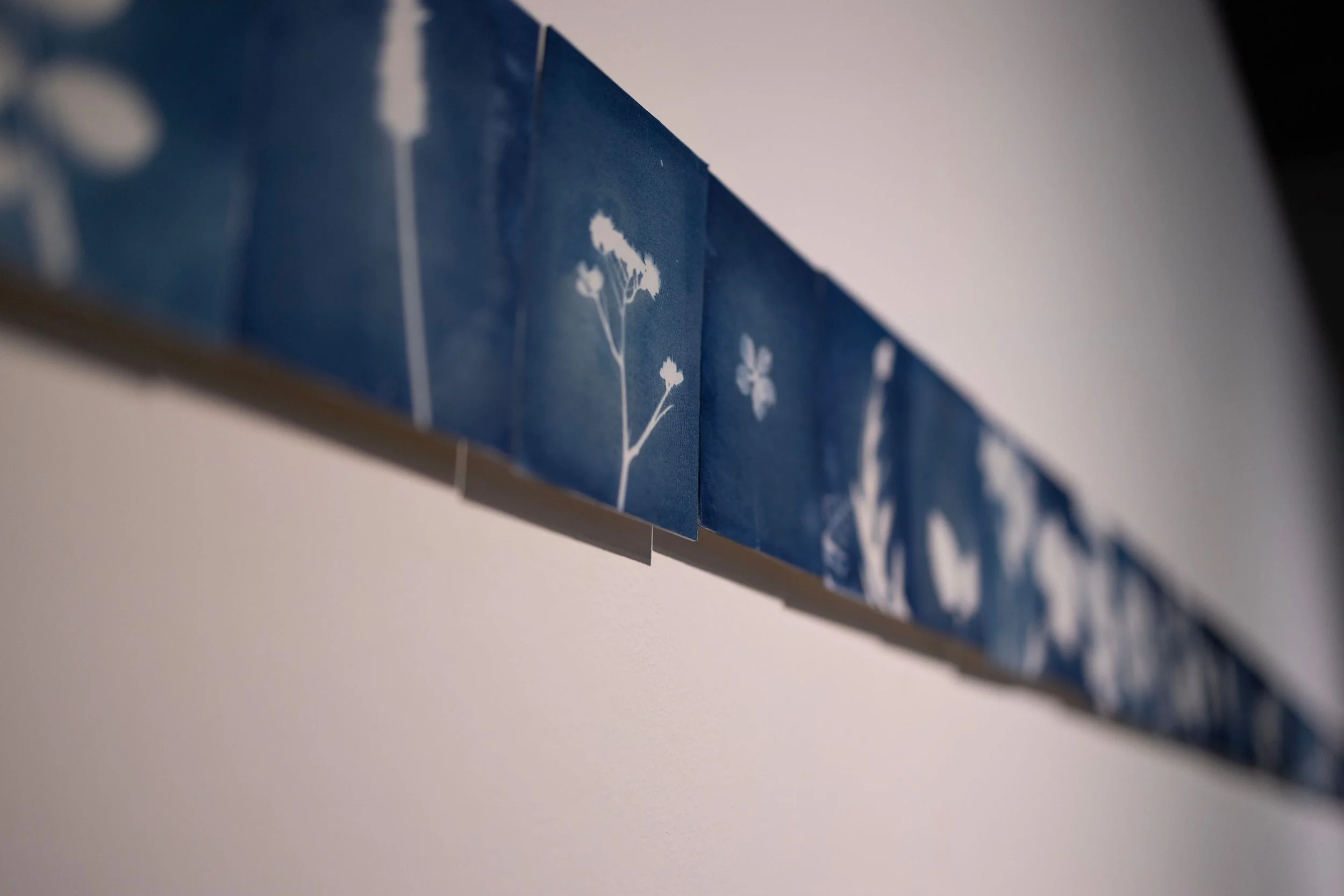
Cada impressão resulta de condições específicas de luz, duração e contacto. Pequenas diferenças tornam-se decisivas. Nenhuma imagem coincide com outra.
A série forma-se por aproximação. Mantém uma relação de semelhança, mas não se estabiliza.
O que permanece não é a forma da flor, mas a persistência da sua interrupção, em negativo.
Um conjunto de ocorrências que se organiza como presença acumulada. Não narrativa. Cada uma mantém a sua autonomia, ao mesmo tempo que afecta as restantes.
Aquilo que resta não permite regressar ao que esteve. Sustenta um estado posterior. O que se perdeu continua a actuar.
Primeiro, latência.
Uma espera.
Nada se conclui.
A superfície mantém-se aberta. Instável. Disponível.
Permanece. Insiste.
Filipe Faria
The flowers
An object set apart from time by what remains after use. It retains signs of repetition, small accumulated variations that do not cancel each other out and remain active, even when the gesture no longer occurs.
Kept, the object does not settle outside time. It carries time. What has passed and does not return, and another that insists, inscribed in the material, without fully ceasing. A layered time.
What is seen is a later state. An after that organises itself as a condition, not a sequence. After use, after presence, after the gesture. Failure.
The surface and the edge are unstable. They retain in appearance. Uneven. Part holds, part gives way. What is inscribed does not complete itself. It remains as an interval. Lack.
Attention draws closer. Loses definition. Moves away. Reorganises. No position resolves it. What is recognised remains unstable, in a relation of resemblance that does not coincide.
Repetition installs itself as structure, but does not confirm. Each occurrence shifts the previous one, introducing a minimal difference that accumulates and prevents a single form from fixing.
Failure runs through it as a condition, not as an accident. Failure of coincidence. Failure of retention. Failure of the line. And it is this failure that produces variation.
The surface becomes a field. A place where different states coexist, without organising into a progression. What has been does not disappear. It remains active.
Time does not pass.
The flowers, already fixed as a motif on the object, return as a trace of that repetition. As they come into contact with the surface, they cease to function as a recognisable form. They interrupt the exposure. They introduce zones of reserve where the light does not fully establish itself.
What becomes visible depends on that interruption. It does not correspond to what was there, but to what did not fully fix. A trace that does not reconstruct the form, only displaces it.
Each impression results from specific conditions of light, duration and contact. Small differences become decisive. No image coincides with another.
The series forms through approximation. It maintains a relation of resemblance, but does not stabilise.
What remains is not the form of the flower, but the persistence of its interruption, in the negative.
A set of occurrences organised as accumulated presence. Not narrative. Each maintains its autonomy, while at the same time affecting the others.
What remains does not allow a return to what was. It sustains a later state. What has been lost continues to act.
First, latency.
A waiting.
Nothing is resolved.
The surface remains open. Unstable. Available.
It remains. It insists.
Filipe Faria
Guardados 004 [unstable archive]
A solução prepara-se. Duas partes, separadas até à mistura. Citrato férrico amoniacal, ferricianeto de potássio. Em partes iguais, num líquido que não anuncia nada. A aplicação não é uniforme. O pincel deixa zonas mais densas, outras mais abertas. Outra passagem. Aqui e ali. O algodão absorve de forma desigual. A fibra retém. Distribui. Interrompe. A superfície não é neutra. Participa. A secagem demora. Nada acontece. Ainda. A imagem não existe. Primeiro, latência. A luz incide. Não há um instante de transformação visível. O ferro altera-se progressivamente. Reduz-se. O que se transforma não se mostra. Há zonas onde a incidência se aproxima da saturação, como se a luz a queimasse sem a consumir. O contacto interrompe. As flores não se imprimem. Retêm. Impedem. Criam zonas onde a radiação não actua. A forma não surge. Reserva-se. O que permanece invisível começa a fixar-se. A exposição prolonga-se. Depende do dia, da intensidade, da inclinação da luz. Não há duração exacta. O tempo não se mede com precisão. Ajusta-se. A superfície escurece. Ainda instável. A água introduz a ruptura. Dissolve os sais não reagidos. Arrasta. Liberta. A imagem aparece nesse momento. Não antes. Forma-se por precipitação. Azul de Prússia. O que não reagiu desaparece. A imagem surge por diferença. O peróxido de hidrogénio intervém depois. Acelera a oxidação. Intensifica o azul. A lavagem não estabiliza completamente. Continua a deslocar pequenas partículas. O azul aprofunda-se. Algumas zonas cedem. Outras mantêm-se. Cada impressão responde de forma diferente. Pequenas variações tornam-se decisivas. Temperatura. Tempo de exposição. Quantidade de solução. Pressão do contacto. Absorção da fibra.
Nada coincide. O que se fixa não corresponde ao que se antecipou. Resulta de condições que não se repetem. Aquilo que permanece não é a forma da flor, mas a persistência da sua interrupção,
em negativo.
Filipe Faria
The solution is prepared. Two parts, kept separate until mixing. Ferric ammonium citrate, potassium ferricyanide. In equal parts, in a liquid that announces nothing. The application is not uniform. The brush leaves denser areas, others more open. Another pass. Here and there. Cotton absorbs unevenly. The fibre retains. Distributes. Interrupts. The surface is not neutral. It participates. Drying takes time. Nothing happens. Yet. The image does not exist. First, latency. Light falls. There is no visible moment of transformation. The iron alters progressively. It reduces. What transforms does not show. There are areas where exposure approaches saturation, as if the light burned the surface without consuming it. Contact interrupts. The flowers do not print. They retain. They obstruct. They create zones where radiation does not act. The form does not appear. It holds back. What remains invisible begins to fix. Exposure extends. It depends on the day, the intensity, the angle of the light. There is no exact duration. Time is not measured precisely. It is adjusted. The surface darkens. Still unstable. Water introduces the rupture. It dissolves the unreacted salts. Carries them away. Frees. The image appears at that moment. Not before. It forms by precipitation. Prussian blue. What does not react disappears. The image emerges through difference. Hydrogen peroxide intervenes afterwards. It accelerates oxidation. It intensifies the blue. Washing does not fully stabilise. It continues to displace small particles. The blue deepens. Some areas yield. Others hold. Each print responds differently. Small variations become decisive. Temperature. Exposure time. Amount of solution. Pressure of contact. Absorption of the fibre.
Nothing coincides. What fixes does not correspond to what was anticipated. It results from conditions that do not repeat themselves. What remains is not the form of the flower, but the persistence of its interruption,
in negative.
Filipe Faria
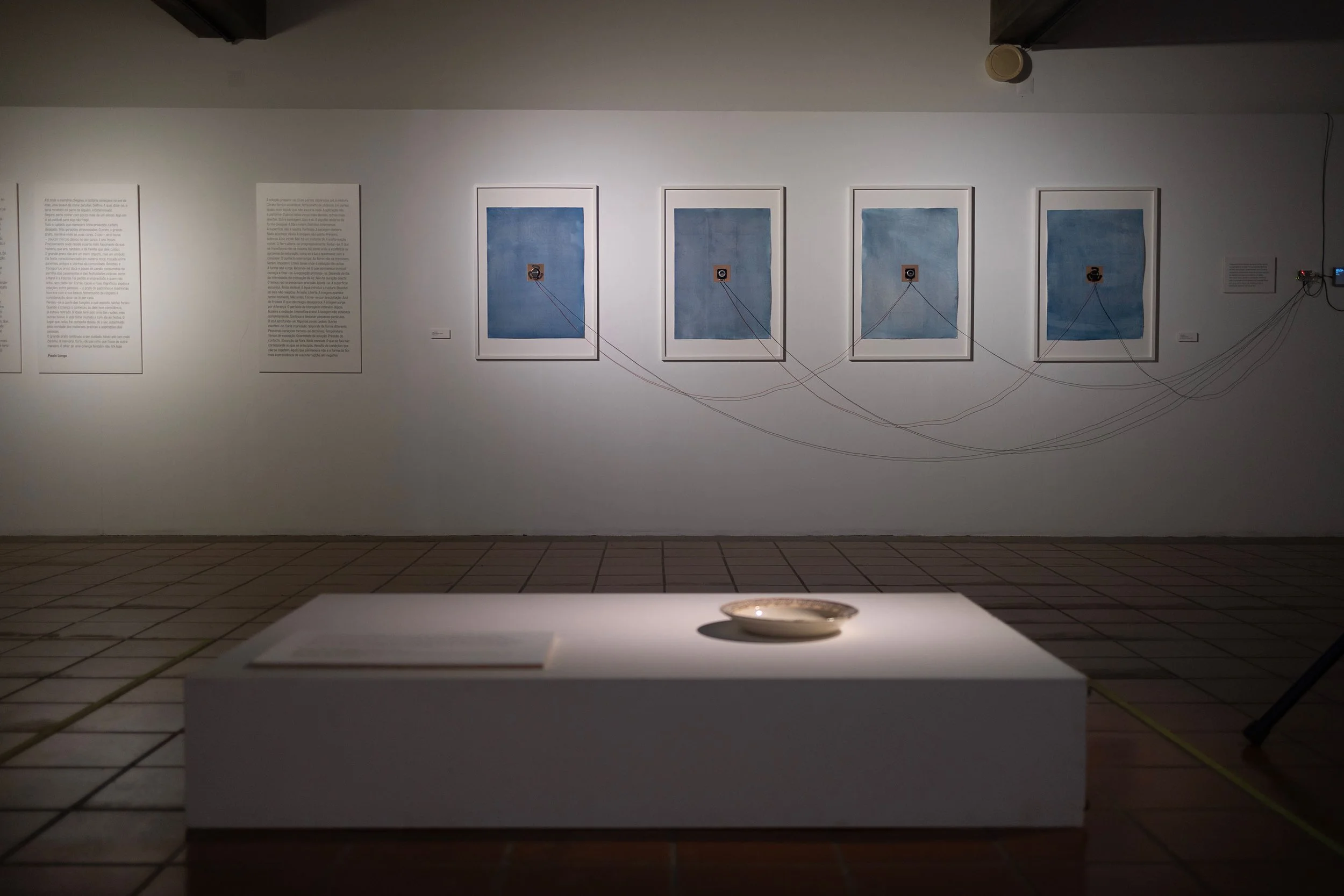
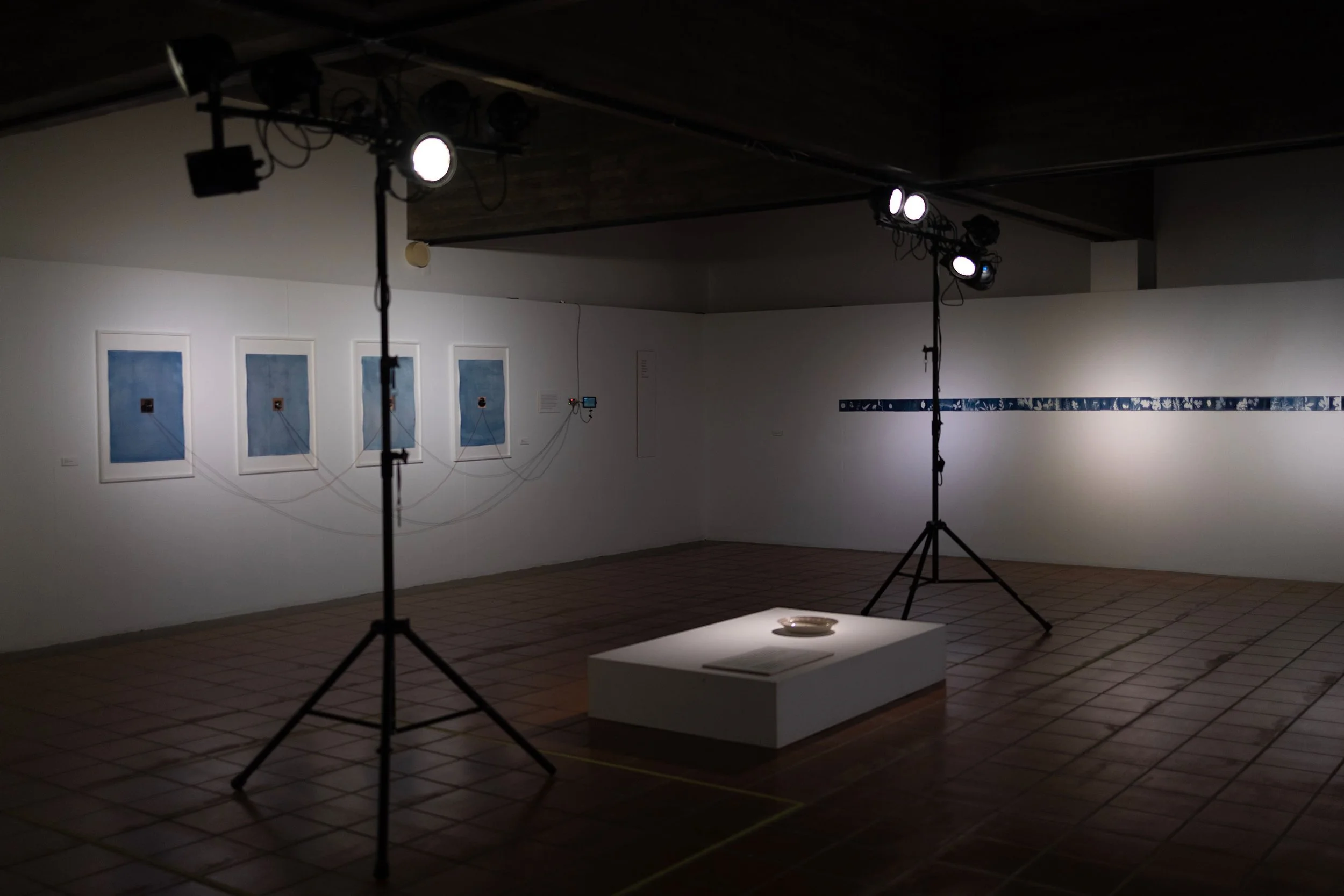
#1
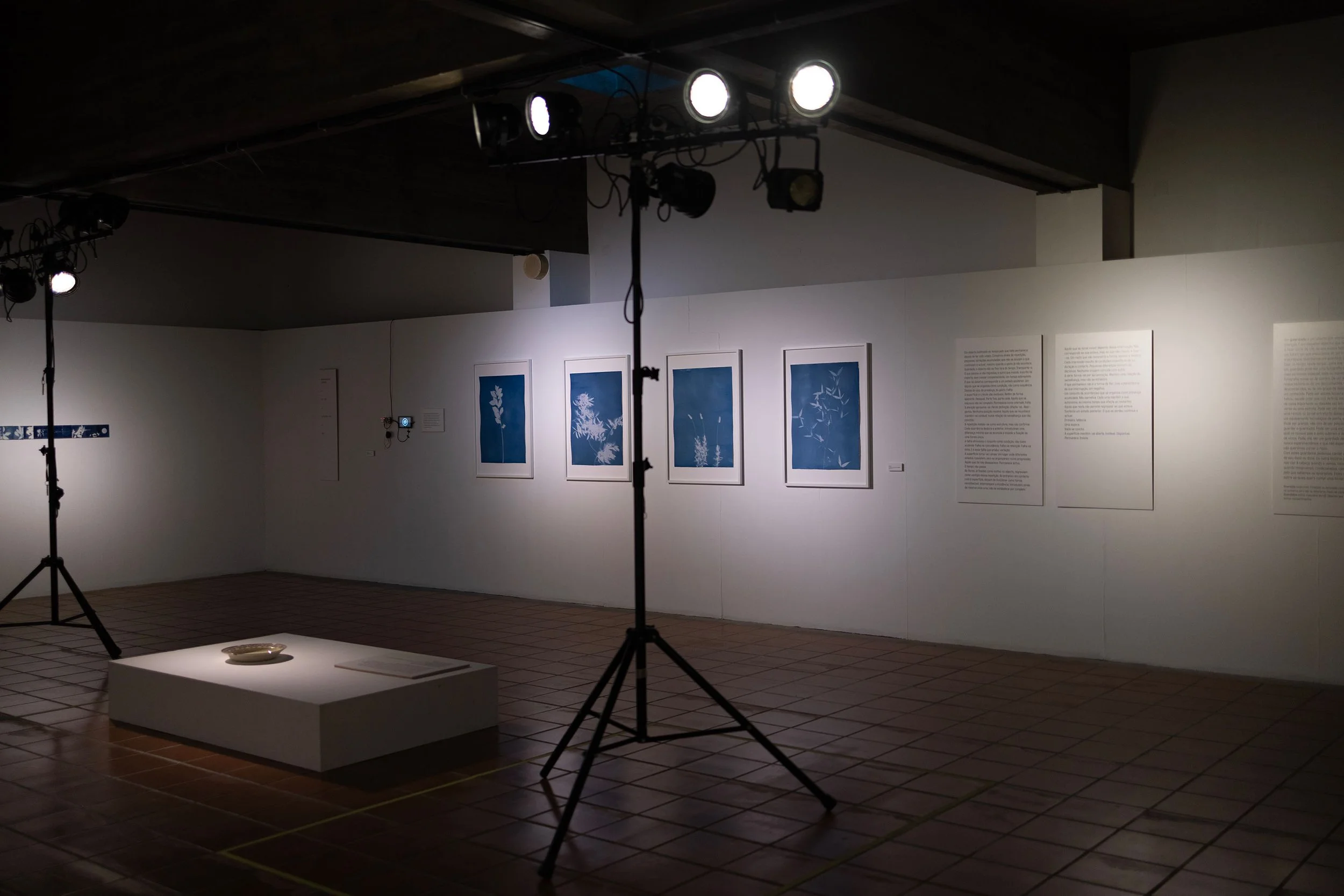
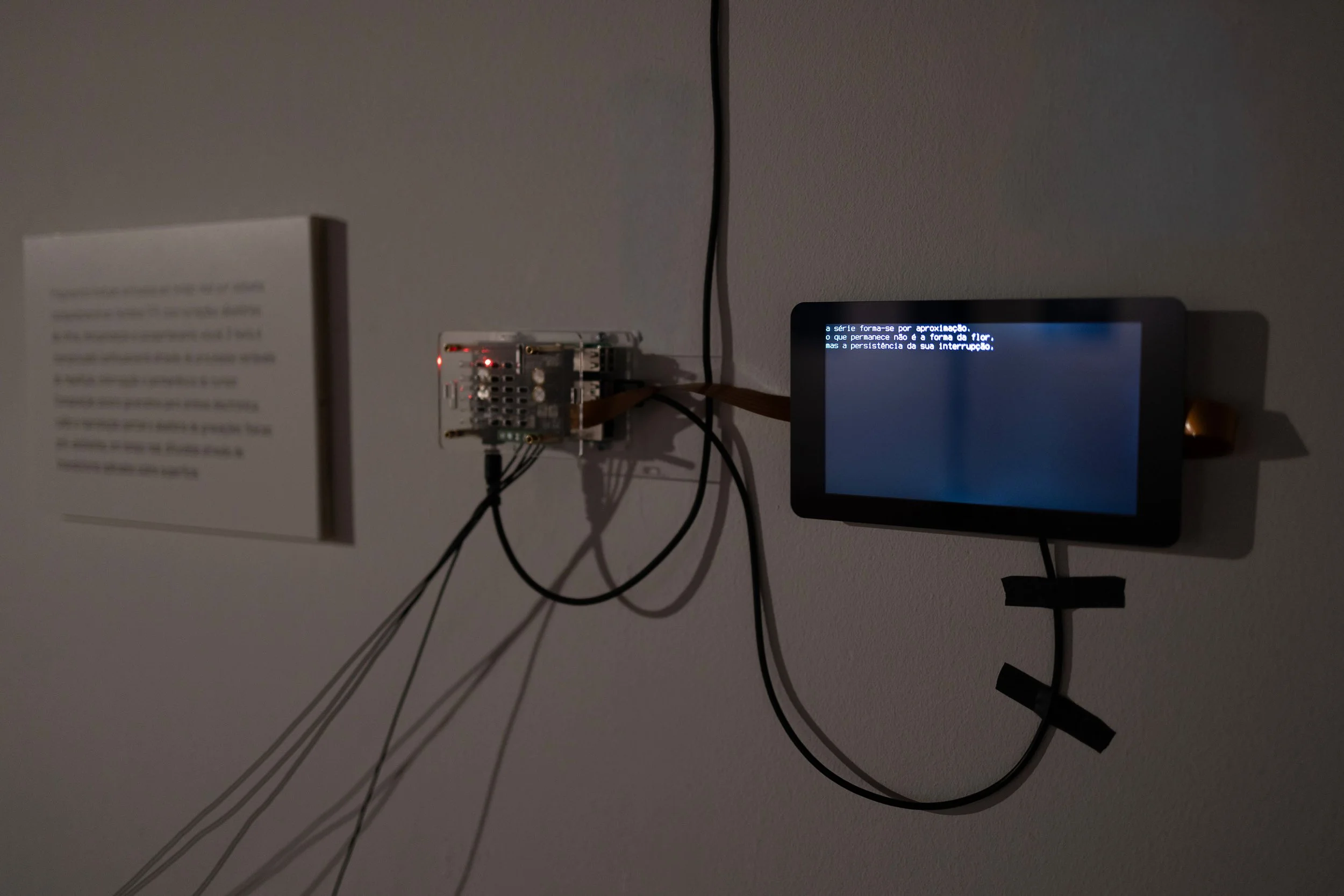
Fragmentos textuais activados em tempo real por sistema computacional em terminal TTY, com variações aleatórias de ritmo, temporização e comportamento visual. O texto é reorganizado continuamente através de processos variáveis de repetição, interrupção e permanência do cursor.
Composição sonora generativa para síntese electrónica, ruído e reprodução parcial e aleatória de gravações físicas pré-existentes, em tempo real, difundida através de transdutores aplicados sobre superfície.
#2
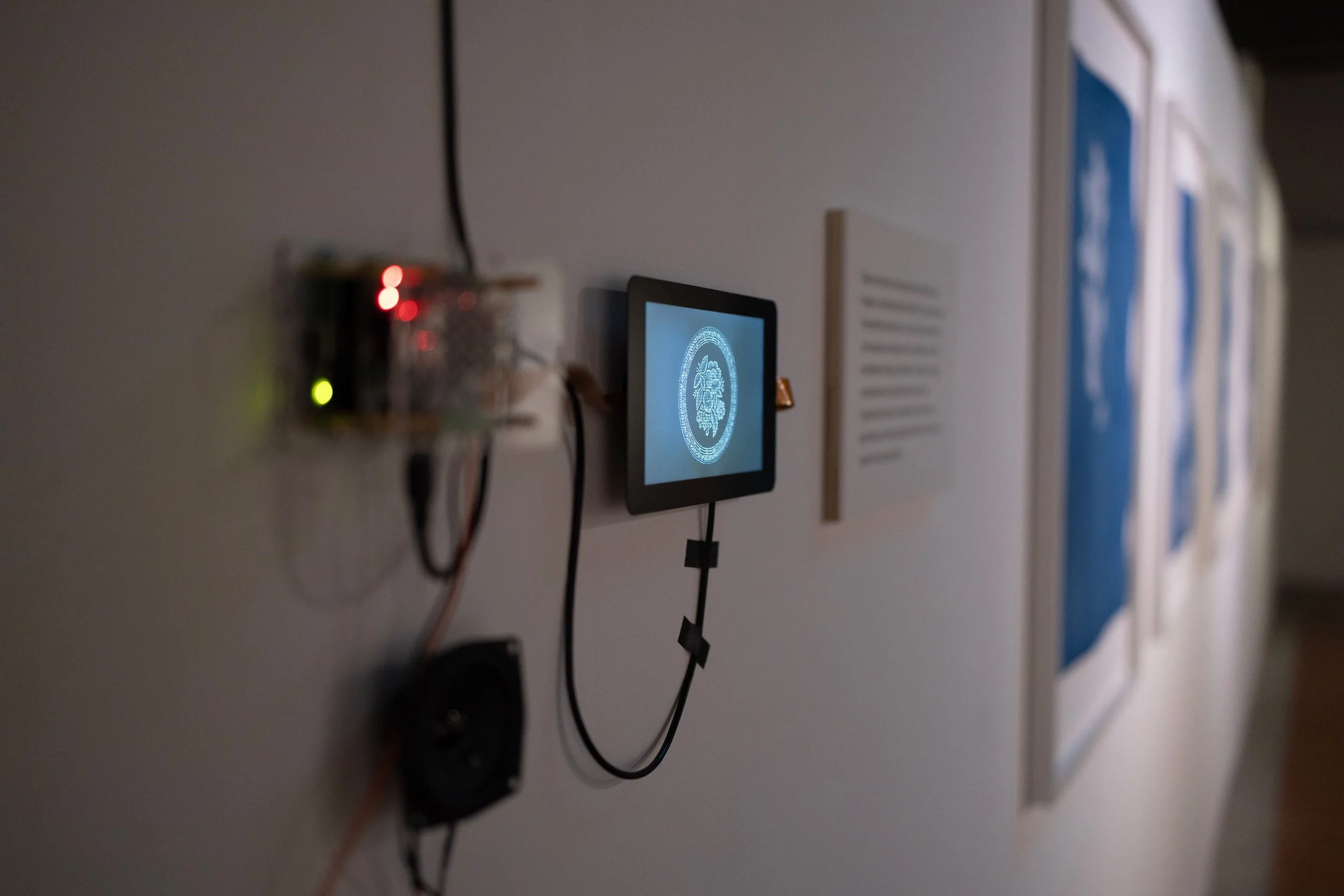
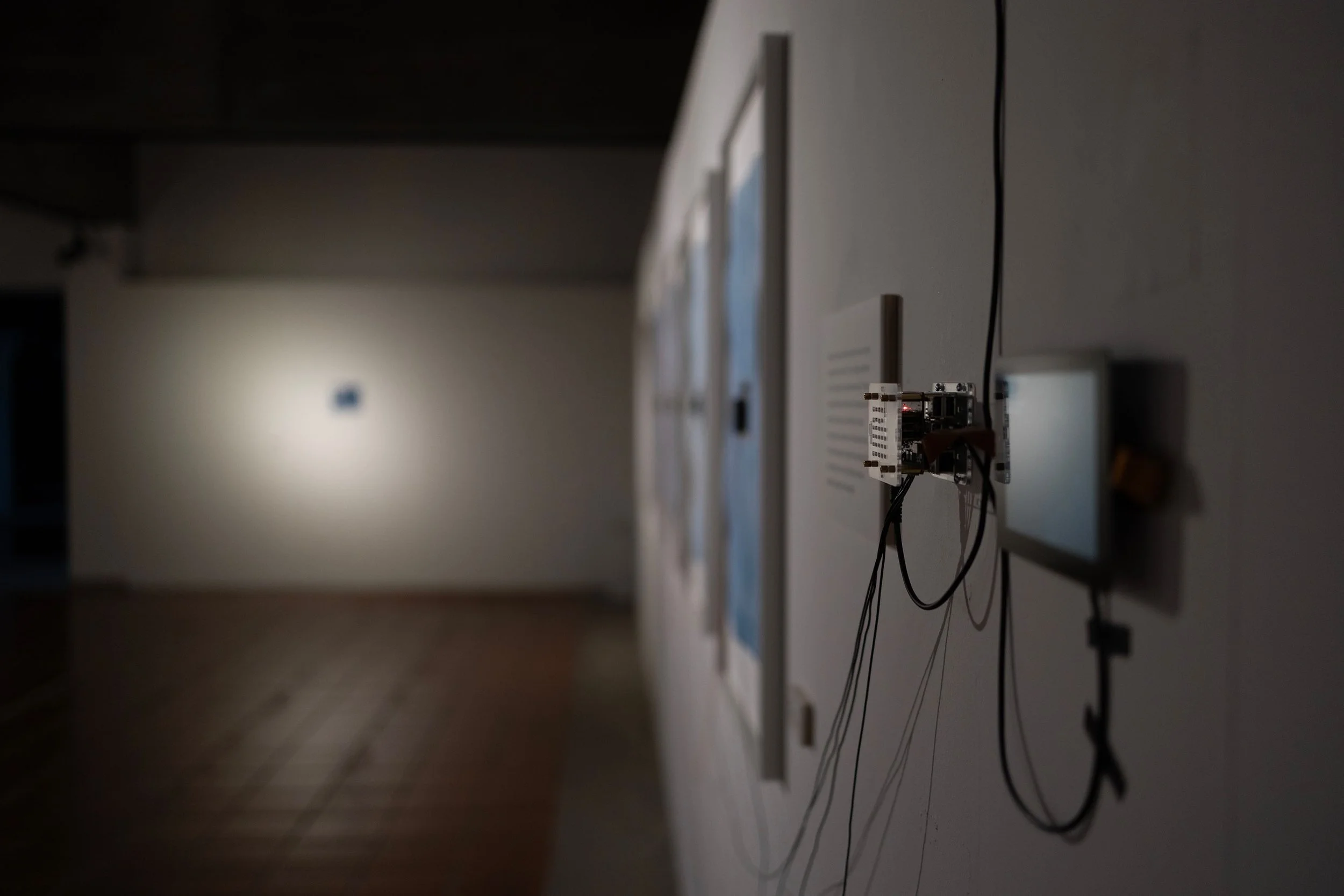
Sistema autónomo de processamento electrónico de imagem e reprodução textual. Objecto fixo continuamente retransmitido através de circuito visual monocromático, com pequenas variações de sinal, repetição temporal e instabilidade residual, submetido a rotação contínua por processamento computacional em tempo real.
Fragmentos textuais reproduzidos por síntese vocal automática e emitidos localmente através de dois pontos sonoros de campo próximo.
(NH4)5[Fe(C6H4O7)2]
K3[Fe(CN)6]
↓
Fe³+ → Fe²+
↓
Fe4[Fe(CN)6]3 · xH2O
↓
H2O2
Separado.
Mistura.
Redução.
Precipitação.
Revelação.
Azul.
Intensificação.
Separated.
Mixing.
Reduction.
Precipitation.
Revelation.
Blue.
Intensification.
Posfácio
Paulo Longo
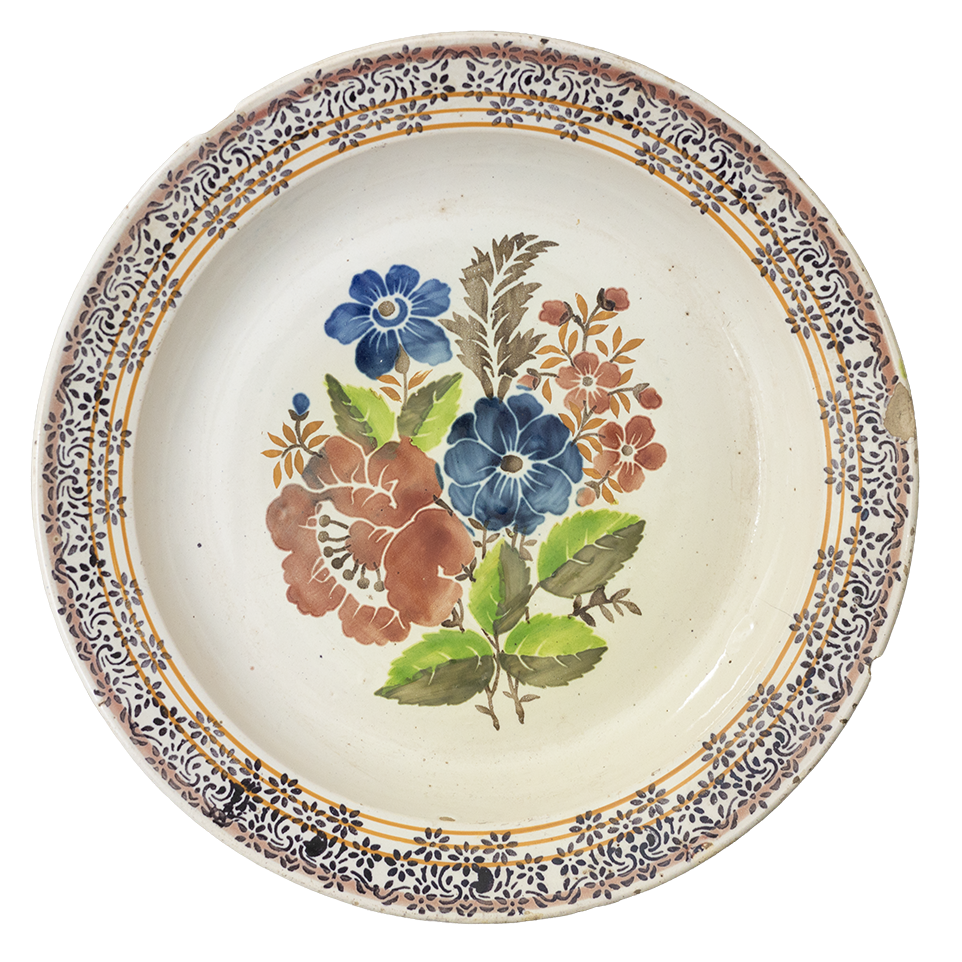
No princípio era a cor. A atração do desenho. Vibrante, lá no alto. Inacessível.
Não se lhe podia tocar. Podia partir-se. Assim o decidiam os adultos perante a criança curiosa e inquieta.
Foram anos de interrogações e alguma frustração. A bela imagem continuou, anos a fio, nessa condição. A criança, essa, à espera. À espera da mudança que o tempo traria. A cada visita, uma olhada. Para ver se ainda estava tudo no mesmo sítio. Se nada tinha mudado. Se dali teria saído por algum motivo que os crescidos considerassem válido o suficiente. Mas não. Nada.
A bela imagem permanecia intacta e intocável. Ou quase. Só a limpeza, cuidadosa, a afastava um pouco dessa condição.
Mais do que estima, parecia haver uma espécie de veneração implícita. Aquele objecto detinha um valor que não se podia expressar em termos materiais. Seria algo impensável, ouvia-se dizer de tempos a tempos.
Passaram-se anos até que a criança pudesse compreender verdadeiramente o seu significado. Ainda não era um adulto — mas já não era uma criança — quando a história, aos poucos, se foi revelando.
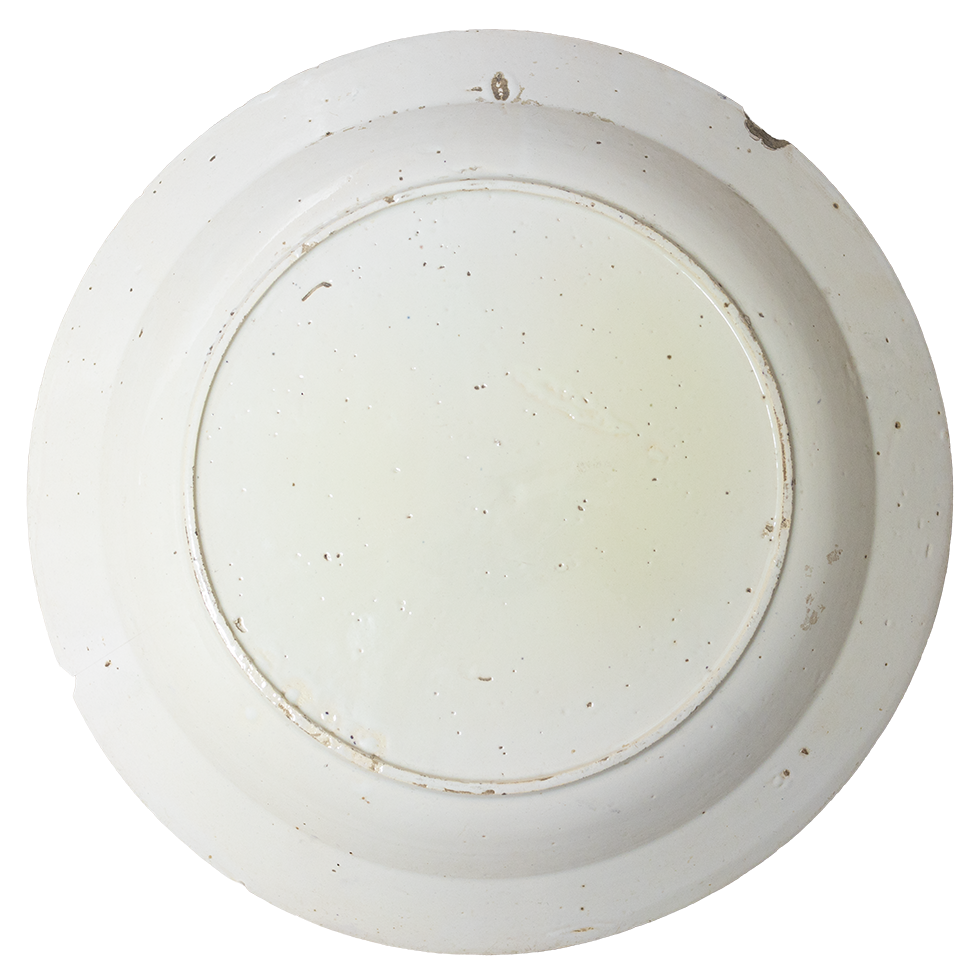
O muito belo era também o muito antigo. Uma definição suspeita por detrás de toda a atenção que merecia entre os guardiões da memória familiar. Um entre vários, pois a bela imagem — agora definitivamente um prato — não estava sozinha. Vivia na cantareira entre os seus pares. Que, na verdade, não o eram bem. A antiguidade e a dimensão davam-lhe um estatuto algo à parte. É verdade que não havia outro igual. Ali, era único.
A criança que já não era uma criança procurou saber mais. Por muito belo que fosse, o prato não falava. A história teria de vir de outro lado. Do lado daqueles que, ao longo dos anos, o tinham guardado tão cuidadosamente.
Até onde a memória chegava, a história começava na avó da mãe, uma bisavó de nome peculiar, Delfina. A qual, dizia-se, o teria recebido da parte de alguém. Indeterminado.
Seguro, seria contar com pouco mais de um século. Algo em si só notável para algo tão frágil.
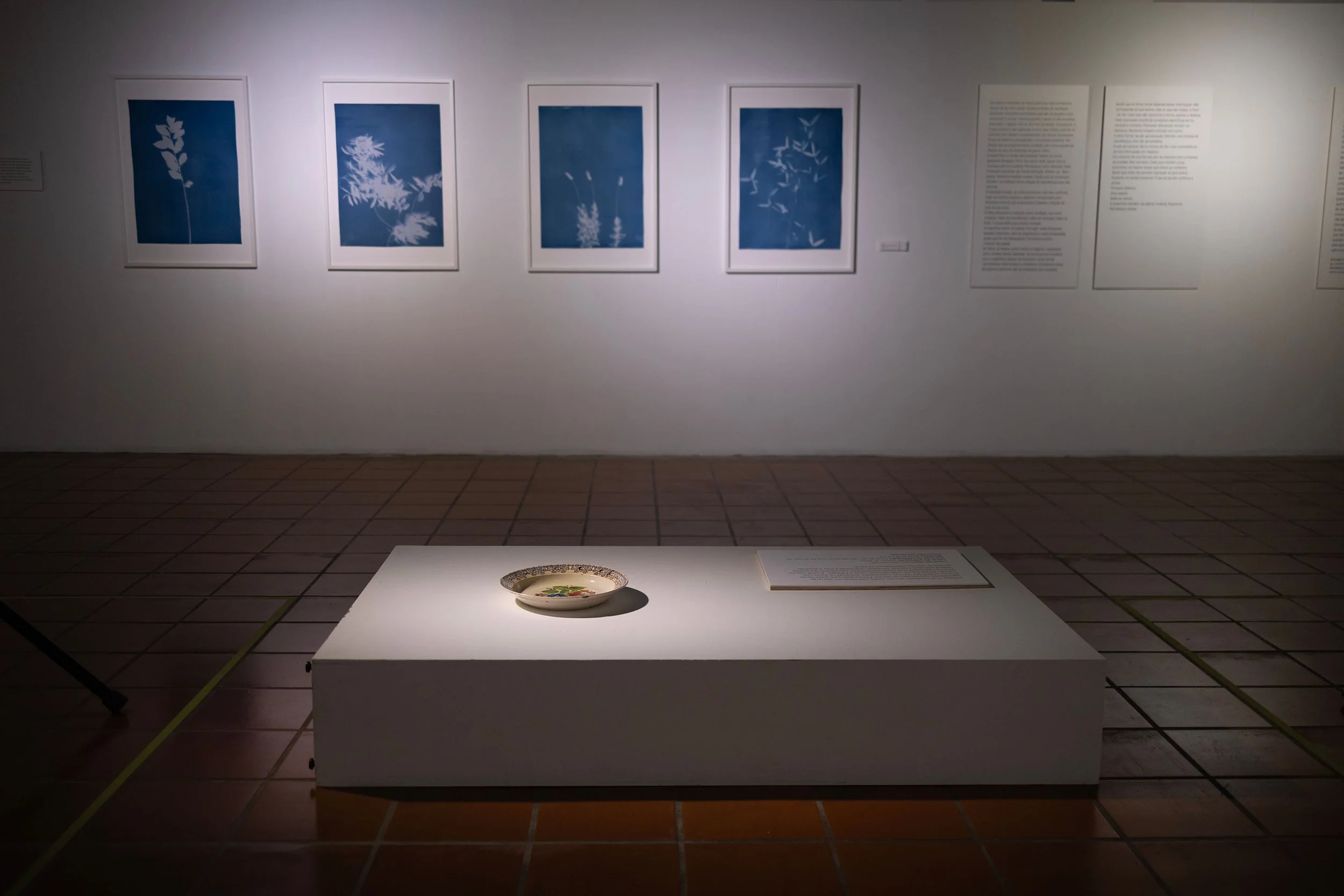
Todo o cuidado que merecera tinha produzido o efeito desejado. Três gerações atravessadas. O prato, o grande prato, manteve vivas as suas cores. O uso — se o houve — poucas marcas deixou no seu corpo. E uso houve. Precisamente onde reside a parte mais fascinante da sua história, que era, também, a da família que dele cuidou.
O grande prato não era um mero objecto, mas um símbolo. Da festa, consubstanciada em matéria doce, trocada entre parentes, amigos e vizinhos da comunidade. Recebeu e transportou arroz doce e papas de carolo, consumidas na partilha dos casamentos e das festividades cíclicas, como o Natal e a Páscoa. Foi pedido e emprestado a quem não tinha nem podia ter. Correu casas e ruas. Dignificou papéis e relações entre pessoas — o prato de padrinhos e madrinhas honrava com a sua beleza, testemunho de respeito e consideração, dizia-se lá por casa.
Perdeu-se a conta das funções a que assistiu, tantas foram. Quando a criança o conheceu ou dele teve consciência, já estava retirado. A idade terá sido uma das razões, mas outras houve. A vida tinha mudado e com ela as festas. O lugar que nelas lhe competia deixou de o ser, substituído pela novidade dos materiais, práticas e aspirações das pessoas.
O grande prato continuou a ser cuidado, talvez até com mais carinho. A memória, forte, não permitiu que fosse de outra maneira. O olhar de uma criança também não. Até hoje.
Afterword
Paulo Longo
In the beginning, there was colour. The pull of the image. Vibrant, up there. Out of reach.
It could not be touched. It might break. That was what the adults decided, faced with a curious, restless child.
Years of questions followed, and some frustration. The beautiful image remained, year after year, unchanged. The child, meanwhile, waited. Waited for the change that time would bring. At each visit, a glance. To see whether everything was still in the same place. Whether nothing had changed. Whether it might have been taken away for some reason the grown-ups considered sufficiently valid. But no. Nothing.
The beautiful image remained intact and untouchable. Or almost. Only careful cleaning disturbed it slightly.
More than care, there seemed to be a kind of implicit reverence. That object held a value that could not be expressed in material terms. That would be unthinkable, one would hear from time to time.
Years passed before the child could truly understand its meaning. No longer quite a child — but not yet an adult — when the story slowly began to reveal itself.
What was most beautiful was also what was oldest. A suspicious definition behind all the attention it received among the guardians of family memory. One among several, for the beautiful image — now definitively a charger — was not alone. It lived on the dresser among its companions. Though, in truth, they were not quite. Its age and its size gave it a somewhat separate status. It is true that there was no other like it. There, it was unique.
The child who was no longer a child tried to learn more. However beautiful it was, the plate did not speak. The story would have to come from elsewhere. From those who, over the years, had kept it so carefully.
As far back as memory reached, the story began with the mother’s grandmother, a great-grandmother with an unusual name, Delfina. Who, it was said, had received it from someone. Undetermined.
It was likely a little over a century old. In itself, something remarkable for something so fragile.
All the care it had received had produced the desired effect. It passed through three generations.. The charger, the large charger, kept its colours alive. Its use — if there was any — left few marks on it. And use there was. Precisely where the most fascinating part of its story lies, which was also that of the family who cared for it.
The large plate was not a mere object, but a symbol. Of celebration, made tangible in sweet form, exchanged among relatives, friends and neighbours in the community. It held and carried rice pudding and papas de carolo, shared at weddings and at cyclical festivities such as Christmas and Easter. It was requested and lent to those who did not have one and could not have one. It moved through houses and streets. It dignified roles and relationships between people — the godparents’ plate, honoured by its beauty, a sign of respect and consideration, as was said at home.
The number of occasions it witnessed is lost, so many were they. By the time the child came to know it, or to become aware of it, it had already been withdrawn. Age may have been one reason, but there were others. Life had changed, and with it the celebrations. The place it once held within them was no longer its own, replaced by new materials, practices and aspirations.
The large plate continued to be cared for, perhaps with even greater affection. Memory, strong, would not allow it to be otherwise. Nor did the gaze of a child. To this day.
Guardados
Um “guardado” é um objecto que sobreviveu ao tempo com intenção. É um daqueles objectos que decidimos poder vir a fazer parte de nós, do que somos hoje, na antecipação de um futuro em que precisamos de ser recordados da sua importância. Guardamos um “guardado” porque o queremos fixar no tempo, neste tempo… para que não se perca nunca.
Guardado (adjectivo): Protegido ou defendido contra algo ou alguém; Que se conserva para não se deteriorar; Posto de parte; Oculto, escondido.
Guardados (nome masculino plural): Objectos que se guardam em caixas ou outros compartimentos.
Um “guardado” pode ser uma fotografia de um acontecimento mais ou menos especial, mais ou menos banal, uma fotografia nossa ou de outrem. De um agente activo na nossa história ou de um desconhecido, ou de um grupo de desconhecidos, ou de um grupo de desconhecidos à volta de um conhecido. Pode ser aquela tesoura da poda que nunca falhou, aquele colar que nos definia, aquele apontamento de coisa importante ou daquela vez em que nos saiu um verso ou uma estrofe. Pode ser um recorte escurecido de uma revista ou jornal entretanto desaparecidos. Pode ser um equipamento tecnológico de ponta, entretanto obsoleto. Pode ser grande, não tem de ser pequeno (haja espaço para guardar o “guardado”). Pode ser uma escada de azeitona na qual os nossos pais e avós subiram e desceram milhares de vezes. Pode, até, ser um “guardado” de gerações… um que nunca experimentámos e que não experimentaremos porque não queremos correr o risco.
Com estes “guardados” podemos contar uma história… a dele, do seu dono ou dona. Ou outra história qualquer, aquela que nos vier à cabeça quando o vemos, tocamos, cheiramos… quando imaginamos, condicionados, como sempre somos, pelo que sabemos ou ignoramos. Estes são os “guardados” sobre os quais queremos contar histórias.
Filipe Faria
A 'guardado’ is an object that has survived over time as a result of intention. It is one of those objects that we decide can become part of us, of who we are today, in anticipation of a future in which we’ll need reminding of its importance. We keep it because we want to preserve it in time, in this time... so that it will never be lost.
Guardado (adjective): protected or defended against something or someone; that is collected and preserved so as not to become damaged; kept away; hidden, concealed.
Guardados (noun, plural): objects that are stored up in boxes or other containers.
A ‘guardado’ can be a photograph of an event, whether special or banal, a photograph of oneself or of someone else. Of an important figure in our lives or of a stranger, or of a group of strangers, or of a group of strangers with someone we know. It can be that pair of pruning shears that never once failed, that necklace that defined us, that note about something important or that time we came up with a verse or a stanza. It can be a browned clipping from a magazine or newspaper that has long since disappeared. It can be what was once a piece of cutting-edge technology, now obsolete. It can be big; it doesn't have to be small (there's plenty of space to keep the ‘guardado’). It can be an olive-picking ladder that our parents and grandparents climbed up and down thousands of times. It can even be a ‘guardado’ from generations past... one we've never used and won't use because we don't want to take the risk.
With these ‘guardados’ we can tell a story... their story or the story of their owners. Or any other story; the one that comes to mind when we see it, touch it, smell it… when we imagine it, conditioned, as always, by what we know or don't know. These are the ‘guardados’ we want to tell stories about.
Filipe Faria
[Guardado: treasured, preserved, guarded, protected, kept safe]
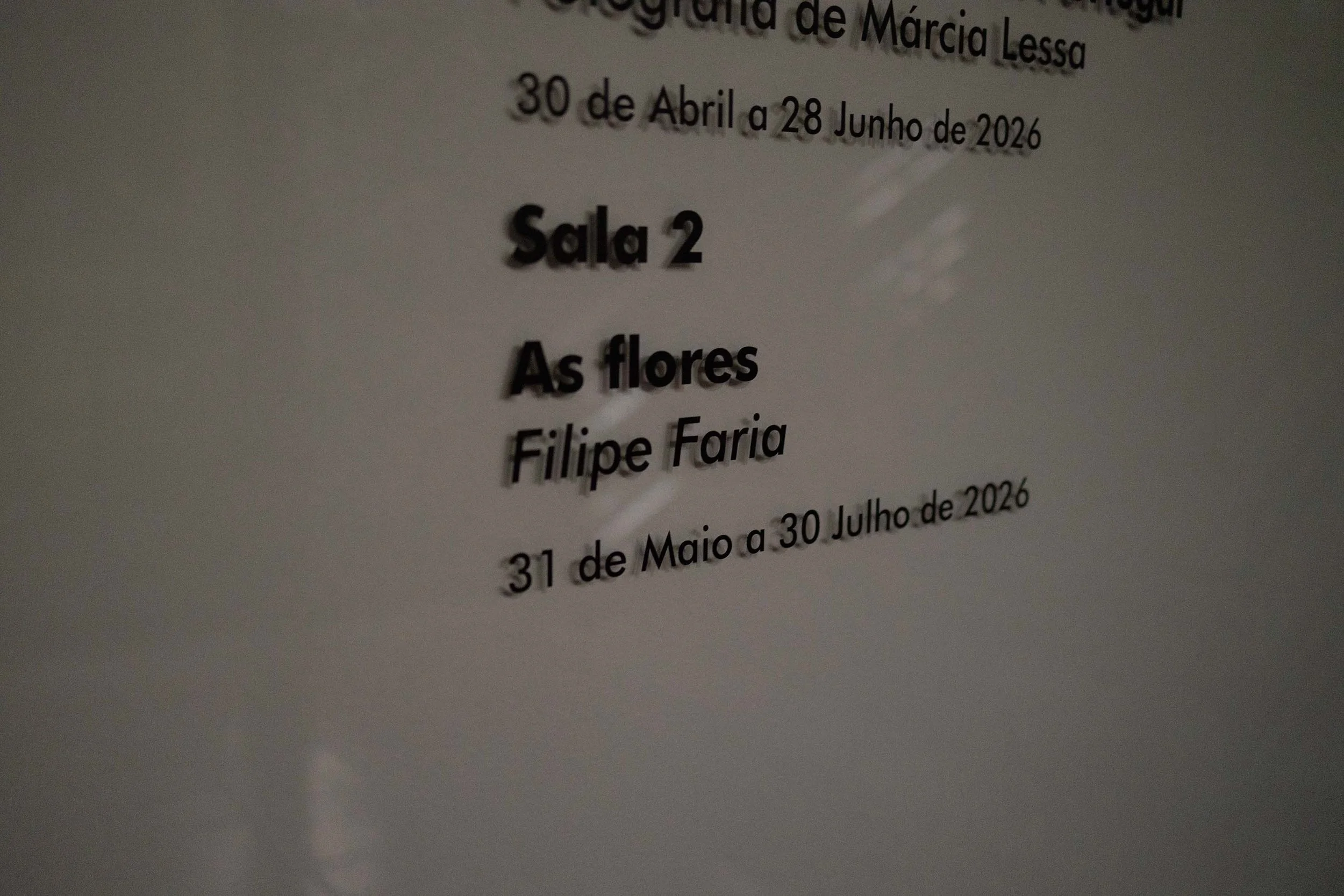
Exposição Exhibition
31.05.2026 — 30.07.2026
Centro Cultural Raiano, Idanha-a-Nova
004
Filipe Faria
Guardados 004
As flores The flowers
Ensaio Essay
Cianotipia Cyanotype
Som Sound
Música Music

Guardados 004 — Livro Book
Fotografia Photography
Filme Film
Som Sound
Filipe Faria
Posfácio Afterword
Paulo Longo
Um projecto A project by
Arte das Musas
Em parceria com In partnership with
Município de Idanha-a-Nova
\UNESCO Creative City of Music
Apoio Support
República Portuguesa - Cultura
\Direção-Geral das Artes
Agradecimentos Acknowledgments
Paulo Longo
Edição Edition Arte das Musas
Colecção Collection Guardados
Produção Production Rita Santos, Luís Sequeira
Parceria Partnership O Homem – Colectivo
Design gráfico Graphic design Filipe Faria
1ª Edição 1st edition Idanha-a-Nova 2026
Impressão Print Rainho & Neves
ISBN 978-989-36322-3-9
MU0151 © 2026 Filipe Faria, fotografias photos © 2026 Arte das Musas
Todos os direitos reservados All rights reserved
Exposição Centro Cultural Raiano, 31 Maio — 30 Julho 2026
Montagem
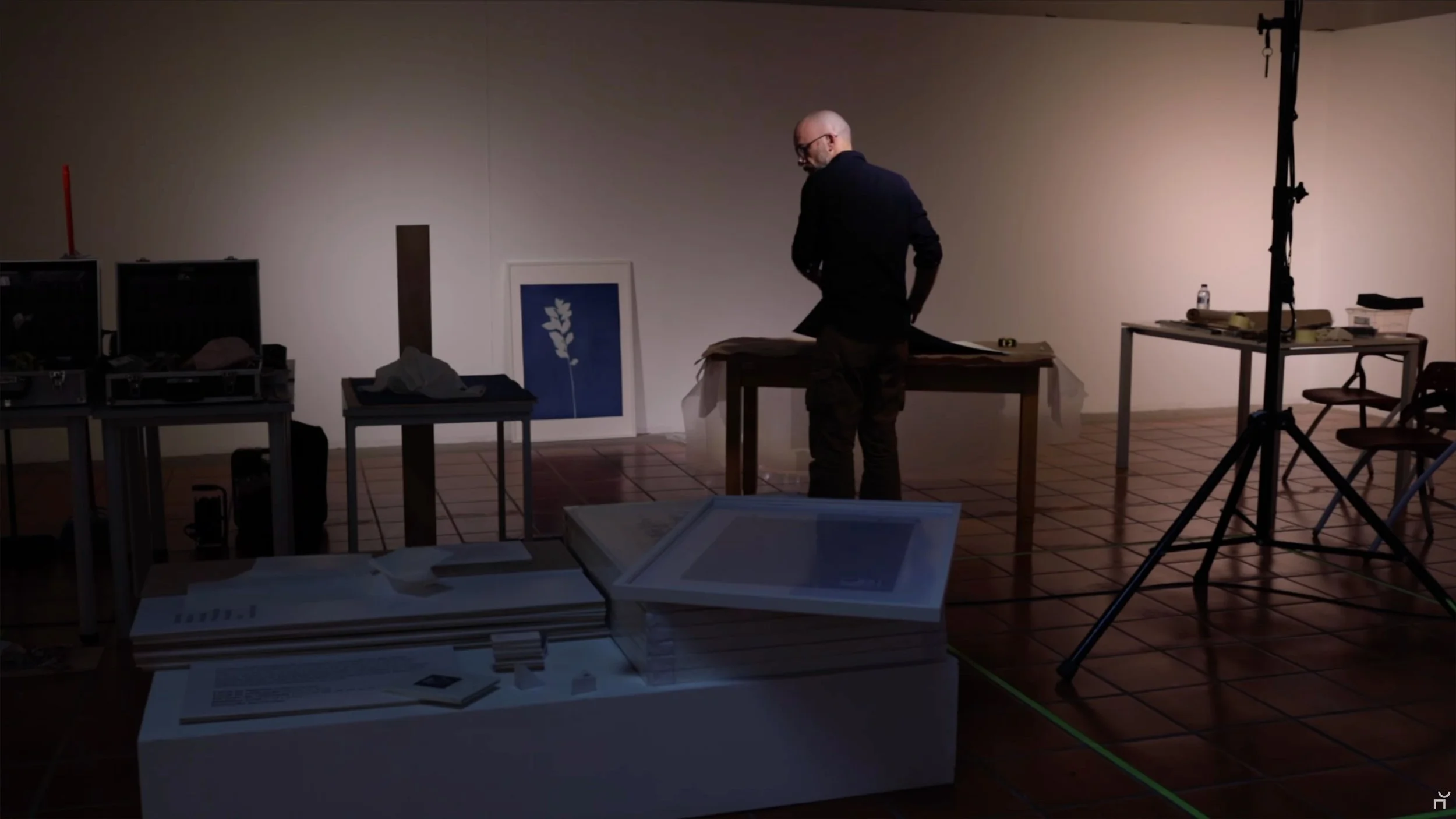
Criação


